
Here is what shortens most water heaters' lives: corrosion from the inside and mineral buildup on the bottom, both of which are largely preventable. As water heats, dissolved minerals come out of the water and settle into a layer of sediment on the tank floor. On a gas unit, that layer sits between the flame and the water, so the steel runs hotter and the tank starts to rumble and pop. On an electric unit, it builds up around the lower element until the element burns out. Meanwhile the anode rod, a metal rod designed to corrode so the tank does not, is slowly used up. Once it is gone, the tank itself becomes the target. In Wilmington, DE, we see this pattern constantly, and most of it was preventable.
The work is hands-on and specific. We drain the tank and flush out sediment until the water runs clean. We pull the anode rod to see how much protection remains and replace it when needed. We lift the T&P valve lever to confirm it opens, then watch it reseat without dripping. For gas equipment, we inspect the burner and flame, pilot or ignition parts, thermocouple or flame sensor, and the vent and draft. For electric equipment, we meter the elements and check the thermostats and wiring. Then we verify the expansion tank still holds its air charge, confirm a safe temperature setting near 120 degrees, and look over every fitting for early signs of a leak.
Tankless heaters skip the sediment bed but have a scale problem of their own. Minerals coat the heat exchanger over time, reducing efficiency and eventually causing shutdowns. Our technicians connect a circulation pump to the isolation valves and run a descaling solution through the exchanger, clean the water filter, inspect the venting, and check the condensate drain on condensing models. You get a straightforward report after every visit, noting what is healthy and what needs attention. Call (302) 204-4823 to book maintenance for your Wilmington water heater.
Most of our service calls are for Water Heater Repair in Wilmington and Water Heater Replacement in Wilmington. Start there if you're not sure what you need.
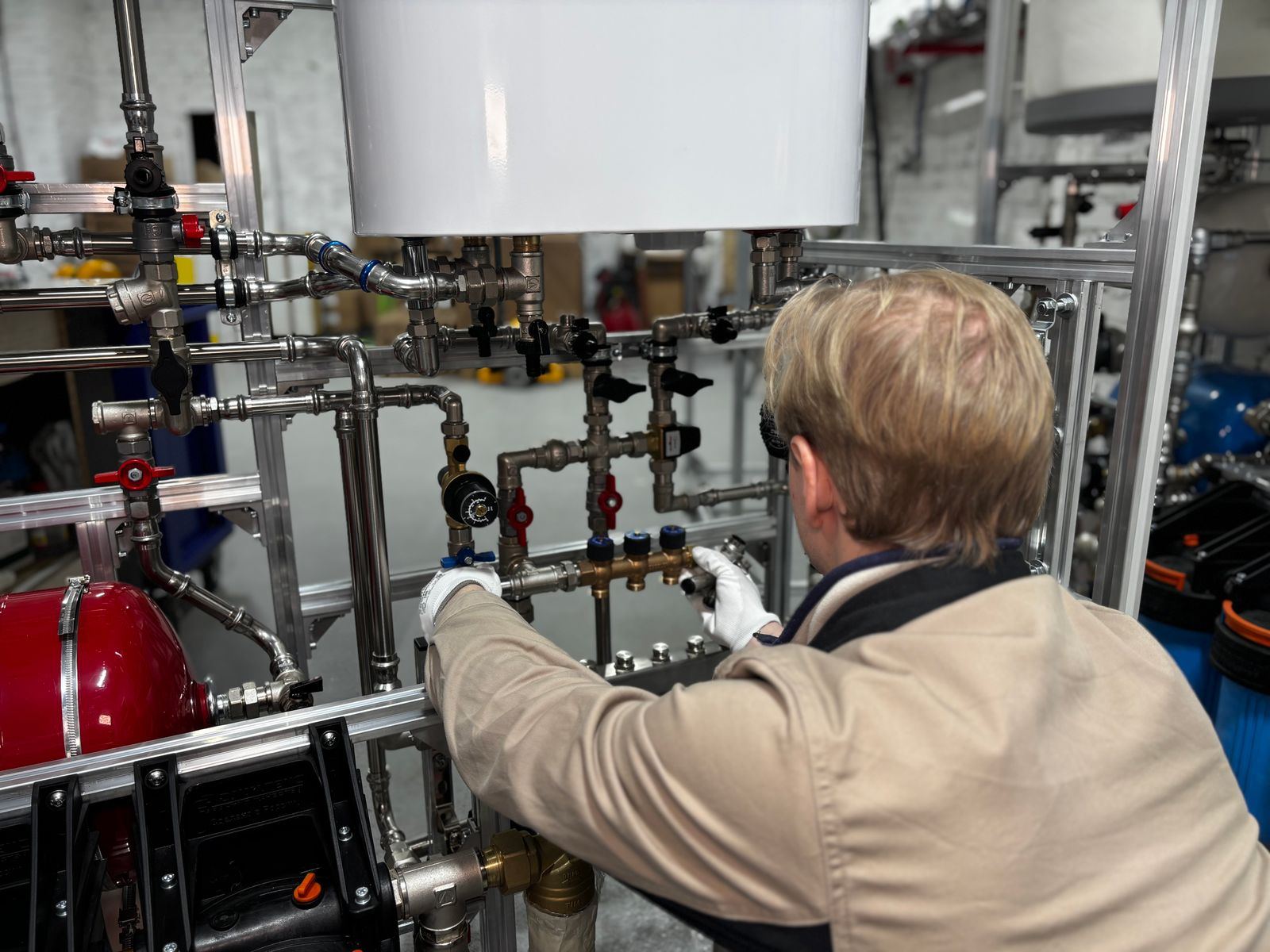
Signs You Need Water Heater Maintenance in Wilmington
A heater that is starting to struggle rarely hides it for long, and the clues are easy to spot once you know them. These are the red flags our technicians see most often before a breakdown:
- More than a year since anyone flushed the tank
- Small drips at the drain valve or connections
- Rumbling, popping, or crackling from the tank as it heats
- Shorter showers before the water turns lukewarm
- Scale warnings or intermittent shutdowns on a tankless system
- Rusty or discolored hot water at the tap
- Energy bills creeping up with no change in hot water use
- A smell like rotten eggs that shows up only on the hot side
A Slow Leak Never Stays Slow
A worn-out anode rod, a sediment-choked tank, or a weak thermocouple rarely fixes itself, and the repair usually costs more the longer it waits. If you notice any of these signs, contact Wilmington Water Heater at (302) 204-4823 for a prompt inspection.
Talk to Us About Water Heater Maintenance
We'll diagnose the problem and give you a straight answer on the fix.
Call (302) 204-4823 NowWhat Homeowners Ask Us Most
The Benefits of Professional Water Heater Maintenance
Not every maintenance task is a good DIY project. Keeping clutter away from the heater, checking for leaks, and noticing new noises are all useful. Flushing, anode replacement, relief valve testing, and burner or element work are a different matter. Hot water, seized fittings, brittle drain valves, and sediment that clogs the valve midway through can turn a simple job into a flooded floor. Relief valves on older heaters sometimes fail to close after testing. And gas-side checks involve flame quality and venting, which affect your household's air.
We come prepared for what an older heater throws at us: replacement drain valves, anode rods sized for your tank, flexible anodes for tight clearances, T&P valves, and meters for testing elements and thermostats. For tankless systems, we bring the pump and descaling setup. Just as important, we know what to look for, from early corrosion at the fittings to a thermocouple starting to weaken, so you can fix small things before it becomes a failure. The goal is simple: a heater that lasts longer, runs more efficiently, and does not surprise you with a leak.
How We Handle Water Heater Maintenance
Every visit follows a step-by-step method built around testing first and replacing parts only when the readings call for it. Here's exactly how a typical visit unfolds:
Inspection and Safety Test
The visit starts with safety: relief valve testing, a leak check, a look at the burner, pilot, and flue on gas models, and element testing on electric ones.
Drain and Flush
Sediment is flushed out through the drain valve until the water comes out clean, and we check that the valve closes without dripping.
Anode Rod Review
The anode shows how well the tank is protected, and the expansion tank check confirms thermal expansion is being absorbed.
Final Adjustments
After refilling, we confirm the heater is running, set a safe temperature, and walk you through the condition of each part.
Water Heater Care Tips From Our Technicians
A little routine care goes a long way toward keeping a water heater running well past its expected lifespan. Follow these tips from our technicians:
- Stay on top of tankless descaling to avoid error codes and reduced flow
- Replace a heavily consumed anode rod to extend the tank's life
- Schedule a flush every year, or every six months if you have hard water
- Consider a water softener if hard water keeps building sediment and scale
- Set the water temperature around 120 degrees for safety and efficiency
- Keep at least a couple of feet clear around the heater for air and service access
- Glance at the pan and connections regularly so small leaks are caught early
Comparing DIY and Professional Work
Relighting a pilot by following the label is one thing. Diagnosing a gas valve, a burned-out element, a dirty flame sensor, or a tankless error code calls for meters and know-how that a pro brings. Consider the following comparison:
| Factor | DIY Attempt | Hiring a Pro |
|---|---|---|
| Sediment Removal | Scalding water and a drain valve that may not reseal | Tank cleared until water runs clean |
| Corrosion Protection | Seized fitting and limited clearance | Replacement matched to your tank |
| T&P Testing | No replacement on hand | Proper discharge line confirmed |
| Gas Components | Flame and draft hard to judge | Venting and combustion inspected |
| Tankless Descaling | Descaling done incorrectly | Descaled with the proper setup |
| Expansion Tank | Waterlogged tank missed | Failing tank flagged |
Book a Visit Today
Don't let a failing water heater get worse. Call Wilmington Water Heater now for prompt, professional service.
Call (302) 204-4823 TodayCommunities We Cover
Our technicians handle water heater maintenance throughout Wilmington and the surrounding communities, with the same upfront pricing everywhere we work.